
What is the difference between radial and diagonal tyres?
In this article, we explain what both tyre types are, how they perform in practice and which type best suits your application. Heuver supplies both radial and bias-ply tyres for transport, agriculture and industrial vehicles across the Netherlands and Europe.

What is a radial tyre?
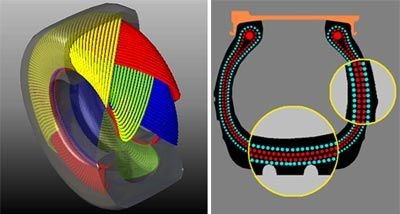
A radial tyre has cord plies that run radially — perpendicular to the direction of travel — across the carcass. These plies are supported by belts made of steel or textile directly beneath the tread.
Advantages:
- Lower rolling resistance → reduced fuel consumption
- Less heat build-up → longer service life
- More comfort at higher speeds
Radial tyres are the standard for trucks, passenger vehicles and modern agricultural machinery.
Disadvantages:
- Less sidewall stability under heavy loads
- More sensitive to sidewall damage
View our range of radial tyres

What is a diagonal tyre?
-
A diagonal tyre has cord plies that are laid diagonally over each other (at an angle of 30–40 degrees). This creates a strong, unified structure between the sidewalls and the tread.
Advantages:
- Very strong at low speeds
- Resistant to heavy loads and impacts
- Suitable for agricultural and industrial applications
Diagonal tyres are mainly used where stability and traction are more important than speed and comfort.
Disadvantages of diagonal tyres
- Higher rolling resistance, causing faster heat build-up
- Less comfort due to the stiffer construction
- Increased fuel consumption
View our range of diagonal tyres
Radial or diagonal tyre: which should I choose?
The right choice depends on the application and load of the vehicle:
- Trucks & road transport: radial tyres for efficiency and longevity
- Agricultural machinery & forklifts: bias-ply tyres for strength and traction
- Mixed use: consult your tyre specialist for the right combination
Heuver advises companies across the Netherlands and Europe on the best tyre for every application.
Frequently asked questions about radial and bias-ply tyres
1. What is the advantage of a radial tyre?
A radial tyre has lower rolling resistance, resulting in reduced fuel consumption, less heat build-up and a longer service life. Ideal for vehicles that operate mainly on the road.
2. When should I choose a diagonal tyre?
Choose a bias-ply tyre if your vehicle mainly operates at low speeds or frequently carries heavy loads. This applies to agricultural machinery, loaders and industrial vehicles.
3. How can I recognise whether a tyre is radial or diagonal?
You can identify this on the tyre sidewall:
- R = radial tyre (e.g. 16.9R34)
- – or D = diagonal tyre (e.g. 16.9–34)
This allows you to recognise the tyre type at a glance.
Want to know more?
For more information, please contact our experts on +31 (0)523 850 850. Do you want access to our webshop? Request your account here.